

Dam Safety
Your sources of clean energy also provide great places to play. Eight hydroelectric facilities across Washington, Idaho and Montana generate 900 megawatts of clean electricity, control flooding---and support recreational areas terrific for boating, swimming, waterskiing and fishing. Power sources and people can co-exist perfectly, as long as we follow some guidelines.
Planning a day on the river? Here's what you need to know.
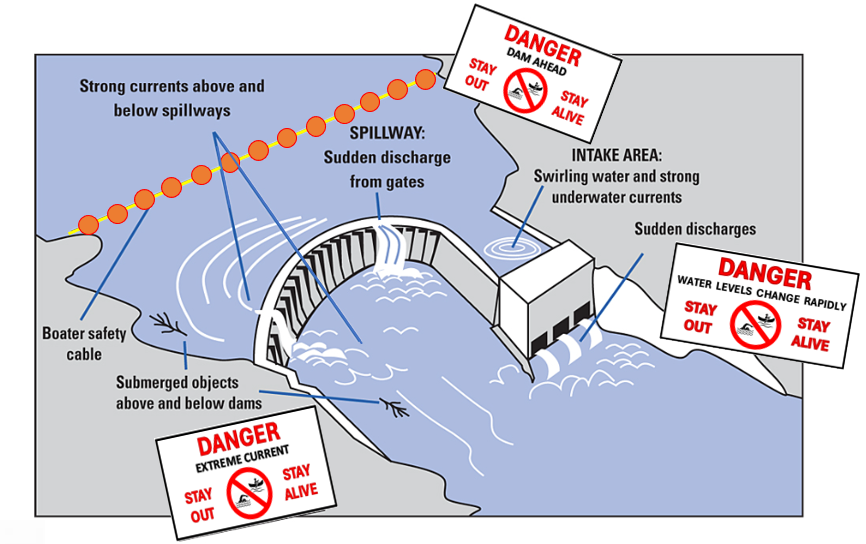
Enjoy outdoor activities in our area lakes and rivers, but be aware: the water current and environment around dams isn't typical. Spill gates and powerhouses cause unusual currents, and sudden discharges can swiftly increase water flows. You can still have fun, just follow a few guidelines to ensure you're as safe as you can be.
- Wear a lifejacket and safety whistle when on the water at all times.
- Obey all safety and warning signs.
- Never fish, swim, play or anchor your boat above or below a dam.
- Don’t cross the boater safety cable above a dam.
- Watch overhead clearances like cables and power lines when sailing.
- Be alert for debris, obstructions and partially submerged objects.
See why it's so important to stay aware near our dams.
Before you go: Check daily river and lake water flow levels.
Speaker 1: The Spokane River is one of our region's greatest natural treasures, powerful, beautiful, and always moving, but that power comes with real hazards, especially near hydroelectric facilities. Operating hydropower facilities in the center of a major city creates unique challenges. Around our dams and substations, conveyor systems, spill gates, and other equipment can start operating remotely without warning.
A City of Spokane ordinance prohibits entering the waterway between the Division Street Bridge and the Monroe Street Bridge due to strong currents, underwater hazards, and proximity to intake structures. A boater safety cable located upstream of ControlWorks provides a visual warning and a physical barrier to signal boats, kayaks, and swimmers of hazardous, potentially high current conditions. The waterway downstream of the boater safety cable and upstream of the dam should never be entered by the public. Posted signage, fencing, and barriers are present around the river in downtown Spokane to keep people out of zones where sudden changes in water flow or equipment operation could pose serious risk.
Even if the water seems low or still, conditions can change instantly as part of normal dam operations. The combination of Spokane River's year-round low temperatures and swift current increase risk for anyone entering the waterway. Avista works continuously to educate the public about hydropower and river safety through interpretive panels and public access improvements throughout Riverfront Park and Huntington Park. Avista also has a new virtual power plant walking tour, offering a smartphone-based educational experience across seven significant hydro sites downtown. Please visit www.myavista.com.